
If you’re craving a cozy, rich comfort dish that’s bursting with layers of flavor, you’re going to adore this Irish Scalloped Potatoes with Cheddar and Cabbage Recipe. Imagine tender potatoes mingling with sautéed cabbage and leeks, all wrapped in creamy Irish cheddar—a perfect dish to bring warmth to any table.

Jump to:
- Why You'll Love This Recipe
- Ingredients & Why They Work
- Make It Your Way
- Step-by-Step: How I Make Irish Scalloped Potatoes with Cheddar and Cabbage Recipe
- Top Tip
- How to Serve Irish Scalloped Potatoes with Cheddar and Cabbage Recipe
- Make Ahead and Storage
- Frequently Asked Questions:
- Final Thoughts
- Irish Scalloped Potatoes with Cheddar and Cabbage Recipe
Why You'll Love This Recipe
I first made these Irish scalloped potatoes on a chilly evening, and honestly, it felt like a warm hug from the inside out. The way the cabbage caramelizes alongside creamy potatoes and sharp cheddar is simply irresistible.
- Layered Flavors: Each layer of potato, cabbage, and cheese builds complex flavors that melt together beautifully during baking.
- Simple Ingredients: You only need a handful of fresh, everyday ingredients that come together to impress.
- Vegetarian-Friendly: This hearty dish satisfies meat-eaters and vegetarians alike without missing a beat.
- Great for Entertaining: Offers 8 generous servings, perfect for sharing at family dinners or holidays.
Ingredients & Why They Work
When it comes to this Irish scalloped potatoes dish, fresh, quality ingredients make all the difference. Picking russet potatoes that are firm and free from bruises will ensure perfect slicing and baking results. Also, go for sharp Irish cheddar to get that authentic bite, though a good aged cheddar works in a pinch.

- Leeks: I love the gentle onion flavor they add, softening beautifully when sautéed with the cabbage.
- Green cabbage: Thinly sliced and caramelized to add depth and sweetness to the layers.
- Garlic: Just a few minced cloves add that essential savory warmth.
- Russet potatoes: Their starchy texture becomes tender and melt-in-your-mouth perfect when sliced thinly.
- Heavy cream: Creates the luscious sauce that binds everything together with silky richness.
- Irish cheddar cheese: Sharp, flavorful, and melts beautifully to give the casserole its signature cheesy punch.
- Olive oil: For sautéing the veggies and giving a subtle fruity undertone.
- Kosher salt: Essential to season and enhance every layer’s natural flavors.
- Fresh parsley and minced chives: Bright herbal notes to sprinkle on top and brighten each bite.
- Freshly cracked black pepper and flaky sea salt: For finishing touches that add texture and a bit of spice.
Make It Your Way
The wonderful thing about this Irish Scalloped Potatoes with Cheddar and Cabbage Recipe is how easy it is to tailor to your taste buds. Feel free to get creative with add-ins or toppings to make it uniquely yours!
- Variation: I love adding a pinch of nutmeg or smoked paprika to the cream mixture for an extra warming depth that perfectly complements the cabbage and cheddar.
- Seasonal twist: Swap out green cabbage for Savoy or even kale in the fall for a bit of rustic texture and flavor.
- Diet-friendly option: For a lighter version, use half-and-half instead of heavy cream and reduce the cheese slightly—though it won’t be quite as rich, it’s still comforting.
- Cheese swap: If you don’t have Irish cheddar, sharp aged cheddar or even a tangy Gruyère add a delicious kick that works beautifully.
Step-by-Step: How I Make Irish Scalloped Potatoes with Cheddar and Cabbage Recipe

Step 1: Prep and Preheat for Perfection
Start by preheating your oven to 375°F so it’s ready when your layers are assembled. This step ensures that once you place the skillet in the oven, your dish will bake evenly from the get-go—a crucial part of achieving that golden crust and tender inside.
Step 2: Sauté the Leeks and Cabbage Till Tender and Caramelized
Heat a 12-inch cast-iron skillet over medium heat and pour in enough olive oil to cover the bottom. Once hot, add your thinly sliced leeks and cook them gently for about 5 minutes until soft and fragrant. Then add the shredded cabbage along with an extra drizzle of olive oil and a generous pinch of kosher salt. Stir often for 8 to 10 minutes, letting the cabbage start to caramelize slightly. Then reduce the heat to low, add 2 tablespoons of water, and cook 5 more minutes until it’s tender and beautifully caramelized—this slow cooking brings out the natural sweetness of the cabbage, a lovely contrast to the sharp cheddar you'll add later.
Step 3: Add Garlic and Set Aside
Stir in the minced garlic and cook for another minute until fragrant. This quick step builds depth without overpowering the dish. Then transfer this aromatic cabbage mixture to a plate and set aside, leaving your skillet clean and ready for layering the potatoes.
Step 4: Warm the Cream Gently
Pour your 2 ½ cups of heavy cream into a small saucepan and heat it over medium-low heat, bringing it just to a gentle simmer—avoid boiling to keep the cream silky and smooth. Warm cream helps the potatoes cook evenly and melds everything together into a rich, luscious sauce.
Step 5: Thinly Slice the Potatoes
While the cream warms, trim the ends off your russet potatoes. Using a mandoline, slice them thinly—about ⅛ inch thick. The goal is to get pliable, even slices so they cook simultaneously and layer beautifully. If you don’t have a mandoline, use a sharp knife, but try to keep the slices as uniform as possible.
Step 6: Assemble the Layers in the Skillet
Back in your reserved skillet, arrange two layers of potato slices in a circular, slightly overlapping pattern. Season lightly with kosher salt. Pour one-quarter of the warmed cream over the potatoes, then spread one-quarter of the sautéed cabbage mixture evenly on top, followed by one-quarter of the shredded Irish cheddar. Repeat this layering 3 more times, creating four total layers of potatoes, cream, cabbage, and cheese. This layering is key to building the rich texture and flavor that makes this dish so comforting.
Step 7: Bake Covered to Cook Through
Cover your skillet tightly with aluminum foil and pop it into the preheated oven. Allow it to bake covered for 40 minutes—this traps steam and helps the potatoes become tender without drying out the cheesy, creamy layers.
Step 8: Uncover and Bake Until Golden
After 40 minutes, remove the foil and continue baking uncovered for another 30 minutes. Keep an eye on the top as it transforms into a gorgeous golden brown and the edges become bubbly. You can test tenderness by piercing a potato slice with a paring knife—it should slide in easily.
Step 9: Rest and Garnish Before Serving
Once out of the oven, let your Irish scalloped potatoes rest for about 5 minutes. This little pause lets everything set perfectly for easier slicing and serves. Just before serving, sprinkle chopped fresh parsley, minced chives, freshly cracked black pepper, and a touch of flaky sea salt on top. These fresh toppings brighten the rich dish and add a delightful textural contrast you won't want to skip.
Top Tip
These simple tips will help you bring out the best in your Irish Scalloped Potatoes with Cheddar and Cabbage Recipe and ensure every bite is full of comfort and flavor.
- Mandoline Slicing Mastery: Using a mandoline to get those potatoes around ⅛ inch thick makes sure they cook evenly and become perfectly tender without turning mushy.
- Gentle Cream Warming: Keep your heavy cream at a gentle simmer and avoid boiling to prevent curdling — this little step keeps your sauce silky smooth.
- Layer With Care: When layering, overlap your potatoes slightly in a circular pattern to create those beautiful scalloped edges that help hold the cream, cabbage, and cheese in place.
- Rest Before Serving: Allow the dish to cool for about 5 minutes after baking. It helps the layers set nicely and makes serving cleaner and easier.
How to Serve Irish Scalloped Potatoes with Cheddar and Cabbage Recipe

Garnishes
Fresh garnishes really lift this hearty dish. Sprinkle chopped fresh parsley and minced chives over the top for a burst of bright color and subtle oniony notes. Add a pinch of flaky sea salt and freshly cracked black pepper right before serving to enhance the flavors and give a slight crunch that contrasts beautifully with the creamy potatoes.
Side Dishes
This makes a fantastic side for roasted meats like pork loin or roast chicken. For a complete Irish-inspired meal, serve it alongside boiled ham and sautéed greens. If you want a vegetarian spread, pair these scalloped potatoes with a crisp green salad and some crusty artisan bread to soak up any extra cream and cheese goodness.
Make Ahead and Storage
Storing Leftovers
After the Irish scalloped potatoes have cooled completely, transfer leftovers into an airtight container and store them in the refrigerator. They’ll stay delicious for up to 3 days, making them perfect for planned meals or quick reheats during the week.
Freezing
You can freeze this dish, but it’s best to do so before baking. Assemble the layers in a freezer-safe dish or your cast-iron skillet, cover tightly, and freeze for up to 2 months. When ready to cook, bake from frozen but add about 20 extra minutes to the baking time to ensure the potatoes cook through.
Reheating
Reheat leftovers in a 350°F oven covered with foil to prevent drying out, for about 20-25 minutes or until warmed through. For a crispier top, remove the foil during the last 5 minutes. The microwave works in a pinch, but the oven method keeps the texture and flavors much better.
Frequently Asked Questions:
Absolutely! While Irish cheddar adds authentic sharpness and creaminess, you can use any aged sharp cheddar or a similar melting cheese if Irish cheddar isn’t available.
A cast-iron skillet is perfect because it retains heat evenly and helps develop a lovely golden crust. However, you can use any oven-safe baking dish of similar size if you don’t have one.
Resting allows the layers to set and the cheese sauce to thicken slightly, making it easier to serve neat slices without the layers slipping apart.
Yes! You can assemble the layers up to a day ahead, keep it covered in the fridge, and bake it fresh when you’re ready to serve. This is a great way to save time on busy days.
Final Thoughts
Making this Irish Scalloped Potatoes with Cheddar and Cabbage Recipe has always felt like a warm hug from the inside out. The layers of tender potatoes, caramelized cabbage, and sharp cheddar wrapped in creamy goodness bring a comforting, home-cooked magic to the table. Whether for a festive occasion or a cozy weeknight, this dish invites everyone to slow down, savor each bite, and share a little joy together.
Print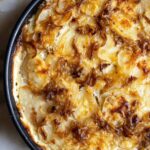
Irish Scalloped Potatoes with Cheddar and Cabbage Recipe
- Prep Time: 30 minutes
- Cook Time: 1 hour 10 minutes
- Total Time: 1 hour 40 minutes
- Yield: 8 servings
- Category: Side Dish
- Method: Baking
- Cuisine: Irish
- Diet: Vegetarian
Description
A comforting Irish scalloped potatoes recipe featuring layers of thinly sliced russet potatoes, sautéed cabbage and leeks, creamy heavy cream, and sharp Irish cheddar cheese, baked to golden perfection. Perfect as a hearty side dish or main course, garnished with fresh herbs and sea salt for added flavor.
Ingredients
Vegetables
- 2 leeks, thinly sliced
- 1 lb thinly sliced green cabbage
- 4 garlic cloves, minced
- 3 lbs russet potatoes, scrubbed and thinly sliced
Dairy & Oils
- 2 ½ cups heavy cream
- ½ lb Irish cheddar cheese, shredded
- Olive oil (enough to cover skillet bottom plus an additional drizzle)
Seasonings & Toppings
- Kosher salt, to taste
- Fresh parsley, chopped (for topping)
- Minced chives (for topping)
- Freshly cracked black pepper (for topping)
- Flaky sea salt (for topping)
Instructions
- Preheat Oven: Preheat your oven to 375 degrees Fahrenheit to prepare for baking the scalloped potatoes.
- Sauté Leeks and Cabbage: Heat a 12-inch cast-iron skillet over medium heat and add enough olive oil to cover the bottom. When hot, add the sliced leeks and cook for about 5 minutes until softened. Add the sliced cabbage, an additional drizzle of olive oil, and a generous pinch of kosher salt. Cook for 8 to 10 minutes, stirring often, then reduce heat to low and add 2 tablespoons of water. Continue cooking for another 5 minutes until the cabbage is tender and caramelized.
- Add Garlic: Stir minced garlic into the cabbage mixture and cook for an additional minute until fragrant. Transfer this mixture to a plate and set aside, keeping the skillet clean for assembly.
- Warm the Cream: Pour the heavy cream into a small saucepan and gently simmer over medium-low heat until warm but not boiling.
- Slice Potatoes: While the cream is warming, trim the ends off the potatoes and use a mandoline to slice them thinly, about one-eighth inch thick. The slices should be pliable and easy to layer.
- Assemble Layers: In the reserved skillet, arrange two layers of potato slices in a circular, slightly overlapping pattern. Season lightly with kosher salt. Pour one-quarter of the warmed cream over the potatoes, then evenly distribute one-quarter of the cabbage mixture and one-quarter of the shredded cheddar cheese on top. Repeat this process three more times, forming four layers total.
- Bake Covered: Cover the skillet tightly with aluminum foil and bake in the preheated oven for 40 minutes to allow the potatoes to cook through and the flavors to meld.
- Bake Uncovered: Remove the foil and continue baking for an additional 30 minutes until the potatoes are tender when pierced with a paring knife and the top is golden brown and bubbly.
- Rest and Garnish: Let the scalloped potatoes cool for about 5 minutes before serving. Garnish with fresh chopped parsley, minced chives, freshly cracked black pepper, and flaky sea salt to taste.
Notes
- Use a mandoline for uniform potato slices to ensure even cooking.
- If you don’t have Irish cheddar, a sharp aged cheddar works well as a substitute.
- Be careful not to boil the cream; keep it at a gentle simmer to prevent curdling.
- Letting the dish rest after baking allows it to set and makes serving easier.
- Cast-iron skillets retain heat well but require proper seasoning and care to prevent sticking.
Nutrition
- Serving Size: 1 serving
- Calories: 410 kcal
- Sugar: 3 g
- Sodium: 340 mg
- Fat: 28 g
- Saturated Fat: 16 g
- Unsaturated Fat: 11 g
- Trans Fat: 0 g
- Carbohydrates: 29 g
- Fiber: 4 g
- Protein: 10 g
- Cholesterol: 95 mg




Leave a Reply