
There’s something irresistibly fragrant and comforting about cozying up with a homemade Thai Chicken Curry Recipe. From the rich coconut milk to the burst of bright herbs and spices, this dish instantly transports your kitchen to the bustling streets of Thailand. I’ve cooked it countless times, and every spoonful feels like a warm, flavorful hug.

Jump to:
Why You'll Love This Recipe
This Thai Chicken Curry Recipe is one of those meals I come back to over and over. It blends straightforward ingredients with layers of flavors that feel both exotic and welcoming — perfect for when you want something special but not complicated.
- Rich and Creamy Texture: The coconut milk gives it that velvety, luscious sauce that clings beautifully to the chicken and veggies.
- Customizable Heat Levels: With red curry paste and optional Sriracha, you control how spicy or mild your curry turns out.
- Quick and Easy Prep: You can have this dish on the table in about 30 minutes, even after work or when life’s busy.
- Flexible Veggie Choices: There's lots of room to swap your favorite seasonal vegetables without losing that authentic Thai vibe.

Ingredients & Why They Work
Each ingredient in this Thai Chicken Curry Recipe contributes something special. Together, they create a balanced, bold flavor that’s complex without being intimidating. When shopping, pick high-quality coconut milk and fresh ginger for the best results.

- Light olive oil or coconut oil: Coconut oil adds extra flavor, but olive oil works fine and has a mild taste.
- Chicken thighs or breasts: Thighs stay juicy and tender; breasts are leaner but can dry out if overcooked.
- Yellow onion: Adds a subtle sweetness and depth to the curry base.
- Red curry paste: The star seasoning that delivers authentic Thai heat and spice—choose your brand carefully for the heat level you want.
- Red bell pepper: Adds color, crunch, and a touch of natural sweetness.
- Carrot: Offers slight earthiness and texture contrast.
- Broccoli florets: They stay crisp and fresh-tasting, balancing the creaminess.
- Fresh ginger: Brightens the curry with a zesty warmth.
- Garlic cloves: A flavorful essential that layers nicely with the ginger.
- Quality coconut milk: The creamy base that ties everything together—never skimp on this.
- Cornstarch: Helps thicken the sauce to the perfect consistency.
- Asian/Thai sweet chili sauce: Adds balancing sweetness and complexity.
- Soy sauce (less sodium): Gives a salty umami depth without overpowering.
- Fish sauce: A splash adds authentic savory richness.
- Lime juice: Cuts through the richness with fresh acidity.
- Brown sugar: Balances out the heat and acidity with subtle sweetness.
- Bay leaf and dried basil: Impart aromatic herbs that round out the flavor.
- Salt and pepper: Season to taste for perfect balance.
- Sriracha or Asian chili sauce (optional): Adjust spice levels to your preference.
Make It Your Way
I love tweaking this Thai Chicken Curry Recipe depending on what’s in my fridge or what flavors I’m craving — and honestly, you should too! It’s a forgiving recipe that welcomes your personal touch.
- Variation: One time, I swapped out the broccoli for snap peas and added zucchini for a bit more crunch — it was a delightful twist and my family asked for seconds!
- Vegetarian Version: Try tofu instead of chicken for a plant-based option; just press it well and cook until golden before adding to curry.
- Mild Option: Use less red curry paste and omit chili sauces, replacing with a dash of sweet Thai chili instead — great for kids or sensitive palates.
- Extra Heat: Add fresh sliced Thai chilies or more Sriracha if you want to turn up the spice factor.
Step-by-Step: How I Make Thai Chicken Curry Recipe
Step 1: Sauté Chicken and Build the Flavor Base
Start by heating your oil in a large nonstick skillet over medium-high heat until shimmering. Toss in the thinly sliced chicken, chopped onion, and red curry paste. Stir frequently to coat the chicken evenly and cook until the chicken starts turning opaque but isn’t fully cooked yet — about 3 to 4 minutes. This step infuses the paste into the chicken and builds that deep, aromatic foundation.
Step 2: Stir-Fry the Vegetables and Aromatics
Add the broccoli florets and give them a quick toss for about a minute — they should stay bright and crisp. Then stir in the chopped bell pepper, sliced carrot, freshly grated ginger, and minced garlic. Sauté for another minute or so to let all those wonderful aromas come together without losing their texture.
Step 3: Add Coconut Milk and Flavor Boosters
Pour in half of the coconut milk, stirring it through. In a small bowl, whisk the cornstarch into the remaining coconut milk until smooth, then add that to your skillet along with the sweet chili sauce, soy sauce, fish sauce, lime juice, brown sugar, bay leaf, dried basil, salt, and pepper. Mix everything gently but thoroughly.
Step 4: Simmer and Thicken Sauce
Bring the curry to a boil, then reduce heat to low and let it simmer for about 5 minutes. Keep an eye on the sauce — it should thicken nicely, and the vegetables should be tender-crisp. If you prefer a thinner curry, just stir in a little water. Don't forget to fish out the bay leaf before serving!
Step 5: Adjust and Garnish
Give your curry a taste and adjust seasoning if necessary — whether that means a splash more lime juice, a pinch more sugar, or an extra squeeze of chili sauce. Garnish with freshly chopped basil, cilantro, lime zest, and a bit of juicy lime juice to brighten everything up. Serve immediately over steamed jasmine rice.
Top Tip
After making this Thai Chicken Curry Recipe a bunch of times, I’ve learned a few tricks that truly elevate it. These tips helped me save time, maximize flavor, and keep the texture right every single time.
- Use Chicken Thighs for Juiciness: I find thighs way more forgiving and flavorful than breasts — especially when sliced just right.
- Partially Freeze Chicken Breasts: If you do use breasts, popping them in the freezer for 15-20 minutes makes slicing super easy and precise.
- Don’t Skip Fresh Ginger and Garlic: These fresh aromatics brighten and balance the rich coconut milk beautifully.
- Adjust Curry Paste to Your Heat Tolerance: Start with less paste and add more mid-cooking if you want it spicier — it’s better than ending up burned out by heat.
How to Serve Thai Chicken Curry Recipe

Garnishes
I always finish mine with a handful of fresh basil and cilantro — their bright herbal notes contrast the creamy sauce perfectly. Adding a sprinkle of lime zest and a squeeze of lime juice gives it that essential tang that wakes everything up.
Side Dishes
Steamed jasmine rice is my go-to side, as it soaks up the curry sauce wonderfully. Sometimes, I also serve with a simple cucumber salad to add a cool crunch and balance the rich flavors.
Creative Ways to Present
For special dinners, I like serving the curry in small, hollowed-out coconut shells for a fun presentation. Another time, I used banana leaves as plates—just enough to add an authentic, tropical vibe without extra cleanup.
Make Ahead and Storage
Storing Leftovers
I store leftover Thai Chicken Curry in airtight containers in the fridge for up to 3 days. The flavors actually deepen overnight, so it tastes even better the next day — just make sure to give it a good stir before reheating.
Freezing
This recipe freezes well too. Freeze individual portions in freezer-safe containers or bags. When ready, thaw overnight in the fridge for best texture. Avoid freezing for more than 2 months to keep the curry tasting fresh.
Reheating
Reheat gently on the stove over medium-low heat, stirring occasionally. Adding a splash of water or coconut milk helps loosen the sauce if it’s thickened too much. Microwaving works fine, too, but I prefer the stovetop for better control.
Frequently Asked Questions:
Absolutely! You can use chicken breasts, but I recommend slicing them thinner and partially freezing before slicing to make it easier. Just be careful not to overcook them, as breasts can dry out faster than thighs.
It depends on how spicy you like your curry. Thai Kitchen brand is milder and a good place to start if you’re spice-sensitive, while Mae Ploy is hotter and offers a bolder flavor. You can always add more paste if you want heat, so start conservatively.
Yes! Simply swap the chicken for tofu or your favorite vegetables like mushrooms and eggplant. Use soy sauce or tamari instead of fish sauce to keep it vegetarian or vegan-friendly.
The cornstarch mixed with coconut milk helps thicken the sauce nicely when simmered. If your curry gets too thick, just stir in a little water or extra coconut milk until you reach the consistency you prefer. Conversely, if it’s too thin, let it simmer a bit longer uncovered.
Final Thoughts
This Thai Chicken Curry Recipe has become my go-to for both weeknight dinners and when I want to impress friends with an effortless, bold-flavored dish. The balance of creamy coconut, tangy lime, and aromatic spices just never fails to delight. I truly hope you give it a try and find a little piece of Thailand on your plate, just like I always do.
Print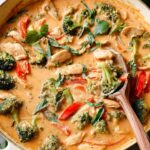
Thai Chicken Curry Recipe
- Prep Time: 18 minutes
- Cook Time: 12 minutes
- Total Time: 30 minutes
- Yield: 4 servings
- Category: Main Course
- Method: Stovetop
- Cuisine: Thai
Description
A flavorful and vibrant Thai curry recipe featuring tender chicken thighs simmered in a rich coconut milk sauce with fresh vegetables and aromatic spices. Perfect for a comforting and balanced meal served over rice.
Ingredients
Main Ingredients
- 1 ½ tablespoons light olive oil or coconut oil
- 1 pound chicken thighs, thinly sliced
- ½ large yellow onion, chopped
- 2 tablespoons red curry paste
- 1 red bell pepper, 1-inch chop
- 1 carrot, thinly sliced
- 1 ½ cups broccoli florets
- 2 teaspoons freshly grated ginger
- 4 garlic cloves, minced
- 1 13.5 oz. can quality coconut milk
- 1 tablespoon cornstarch
- 1 tablespoon Asian/Thai Sweet Chili Sauce
- 2 tablespoons less sodium soy sauce
- 2 tablespoons fish sauce
- 2 tablespoons lime juice
- 1 tablespoon brown sugar
- 1 bay leaf
- 1 teaspoon dried basil
- ¼ teaspoon salt
- ¼ teaspoon pepper
Optional Garnish
- Sriracha or Asian chili sauce to taste
- Lime juice and zest to taste
- Fresh basil
- Fresh cilantro
Instructions
- Sauté Chicken: Heat the oil over medium-high heat in a large nonstick skillet or enameled pan. Once sizzling, add the sliced chicken, chopped onions, and red curry paste. Cook until the chicken is mostly opaque, stirring occasionally to combine flavors.
- Stir Fry Veggies: Add the broccoli florets and stir fry for one minute. Then add the chopped red bell pepper, thinly sliced carrot, grated ginger, and minced garlic. Sauté everything together for one more minute to enhance the flavors and slightly soften the vegetables.
- Add Ingredients: Pour in half of the coconut milk into the skillet. In a separate bowl, mix the remaining coconut milk with the tablespoon of cornstarch until smooth, then add this mixture to the skillet. Add the Asian sweet chili sauce, soy sauce, fish sauce, lime juice, brown sugar, bay leaf, dried basil, salt, and pepper. Stir well to combine all ingredients evenly.
- Simmer: Bring the curry to a boil then reduce heat to a simmer. Cook for 5 minutes or until the sauce thickens and the vegetables reach your preferred crisp-tender texture. If the sauce is too thick, thin it out with a small amount of water. Remove and discard the bay leaf before serving.
- Adjust to Taste and Serve: Garnish the curry with fresh basil, cilantro, lime zest, lime juice, and optional Sriracha or Asian chili sauce according to your taste preferences. Serve hot with steamed rice for a complete meal.
Notes
- You can add an additional bell pepper and zucchini if desired, as per the original recipe variation.
- Chicken thighs are recommended for juicier texture; slice thighs into ½-inch widths for best results.
- If using chicken breasts, slice them thinner (¼-inch wide and cut into 2-inch lengths) and partially freeze to ease slicing.
- Adjust the red curry paste amount depending on your spice preference; Thai Kitchen brand is milder while Mae Ploy is spicier.
- Serve with steamed rice to soak up the delicious curry sauce.
Nutrition
- Serving Size: 1 serving
- Calories: 450 kcal
- Sugar: 7 g
- Sodium: 700 mg
- Fat: 28 g
- Saturated Fat: 20 g
- Unsaturated Fat: 7 g
- Trans Fat: 0 g
- Carbohydrates: 15 g
- Fiber: 3 g
- Protein: 30 g
- Cholesterol: 85 mg




Leave a Reply